
Gopher John: The Black Seminole Who Helped Lead America's Largest Slave Rebellion

In 1836, hundreds of enslaved people walked off Florida's richest sugar plantations and joined an army of Black and Seminole fighters already in the field. Rising among its leaders was a young Black Seminole warrior the soldiers called "Gopher John."
Together and united, they were an existential threat to the South. The general sent to crush them said it plainly:
"This you may be assured is a negro, not an Indian war; and as such it is of the utmost importance to the South that it be instantly closed."
Maj. Gen. Thomas S. Jesup to Georgia Gov. William Schley, December 9, 1836
Jesup understood what the history books would spend the next 150 years forgetting. This was not only a war over Native land. It was a slave rebellion, and its Black and Native fighters were winning. Gopher John would go down in history, when history remembered him at all, as John Horse.
November is Native American Heritage Month, and this story belongs fully to both Black history and Native history: Africans and Seminoles who stood side by side against the most powerful slave society on earth, and for a while, won.
The Word That Named Them Both
The name "Seminole" is generally traced to the Spanish word cimarrón, meaning a wild or runaway one. English speakers turned that same Spanish word into another term: maroon, the name for self-freed Africans who built their own communities beyond the reach of slaveholders.
The Native people who broke away from the Creek confederacy and the Africans who broke away from Carolina and Georgia plantations were described by the same root word. Both were people who refused to be held.
Spanish Florida was where those two refusals met. For more than a century, Africans fleeing bondage in the English colonies headed south, and many settled near Seminole towns. They built their own villages, farmed their own fields, raised cattle, and kept their own weapons. Black towns typically sent a share of their harvest to Seminole leaders, and in return the alliance gave them land, protection, and a place in Seminole political life. The two peoples intermarried, fought together, and translated for each other. Their descendants are known today as Black Seminoles.
How a Boy Got the Name "Gopher John"
John Horse was born around 1812 in Florida, of African and Seminole descent. His surname traces to Cavallo (Spanish caballo, "horse"), which is why records call him Juan Caballo, John Cavallo, John Cowaya, and finally John Horse.
The nickname came from a hustle. As a boy near Fort Brooke, the Army post at Tampa Bay, he sold gopher tortoises to the commanding officer, Colonel George Brooke, for the officers' table. Then he sold them again. And again. The same tortoises, slipped back out of the pen and resold. When Brooke finally figured it out, he was more impressed than angry. He made the boy deliver every tortoise he had been paid for and pinned a name on him so he would never forget it.
The story is usually told as a cute footnote. But here was a Black child, born into a world where the U.S. Army existed partly to return people like him to bondage, using his ingenuity to make a living while studying that army up close, learning its language, and understanding its appetites. He would put those lessons to use as a man, with much higher stakes on the line.
December 1835: The Plantations Empty Out
By the 1830s Florida belonged to the United States, and the government wanted the Seminoles moved west. It also wanted the Black Seminoles, whom slaveholders considered stolen property. Black Seminole leaders understood exactly what removal meant for them. It meant chains.
So they organized. In the months before the war, Black Seminole envoys quietly worked the plantations along the St. Johns River. One of the most important was John Caesar, whose wife lived in bondage on a plantation and who moved between the slave quarters and the Seminole towns. Historian Kenneth W. Porter rescued Caesar from obscurity in a 1946 article in The Journal of Negro History. Most of what we know about Caesar covers barely a year of his life. That year was enough.
When fighting broke out at the end of 1835, Black and Seminole raiders hit the sugar country east of the St. Johns. Plantation after plantation burned, and the enslaved did not wait to be rescued. Researcher J.B. Bird, creator of the documentary project Rebellion: John Horse and the Black Seminoles, counts more than 385 plantation slaves who joined the uprising by April 1836. North Florida's sugar industry never recovered.
A white observer named Woodburne Potter, writing in 1836, described it in one line: "The scene of destruction of the east side of the river, and along the St. Johns River, is truly heart-rending."
For Perspective
Nat Turner's 1831 revolt involved about 70 people, lasted roughly two days, and ended with Turner on the gallows. The Florida uprising drew more than 385 plantation workers into an alliance with free Black and Seminole fighters. It lasted three years and ended with the U.S. Army agreeing to their freedom.
Black and Seminole, Shoulder to Shoulder
What made the U.S. Army so nervous was not just the numbers. It was the partnership.
Black Seminoles were interpreters, scouts, negotiators, and warriors, and they often fought in their own units under their own leaders. The famous Seminole war leader Osceola drew heavy support from Black fighters. Even Jesup, the man trying to break the alliance, admitted where much of its strength lay: "The negroes rule the Indians, and it is important that they should feel themselves secure."
The Army knew what Black fighters had to lose. During an earlier conflict, Brigadier General Thomas Flournoy had ordered that "every negro found in arms will be put to death without mercy." Black Seminoles fought with that history at their backs.
John Horse rose fast in this world. Bilingual, tall, a skilled marksman, and connected by marriage to influential Seminole families, he became a war leader and the man Seminole chiefs sent when they needed someone who could read the Americans. His closest partner was Coacoochee, the Seminole leader known as Wild Cat. The two were about the same age, and their alliance would last the rest of Wild Cat's life.
The Escape Through the Wall
In late 1837, the Army began seizing Seminole leaders who came in under flags of truce. Osceola was taken that way. So were Wild Cat and John Horse, who were locked in a cell inside Fort Marion, the old Spanish stone fortress at St. Augustine known today as the Castillo de San Marcos.
Wild Cat later described the cell. Light came through a single high opening, and the prisoners saw only two choices. "Through this we must effect our escape," he said, "or remain and die with sickness."
They chose the opening. Over weeks they worked an iron bar loose. Accounts say the heavier men cut back on food until they could squeeze through a gap only inches wide. On the night of November 29, 1837, they climbed out, dropped down the outer wall, and disappeared. The next day an officer filed a report that must have been painful to write: "I have to report the escape last night of twenty Indian prisoners, including two women."
"We resolved to make our escape or die in the attempt."
Coacoochee (Wild Cat), on the escape from Fort Marion
Christmas Day at Lake Okeechobee
Less than a month later, the escapees were back in the fight. On December 25, 1837, somewhere between 380 and 480 Seminole and Black Seminole fighters dug in on the northeast shore of Lake Okeechobee, with a swamp in front of them and the lake at their backs. Wild Cat commanded part of the line. John Horse led Black warriors in it.
Colonel Zachary Taylor marched roughly 800 soldiers straight across that swamp. The first volleys, Taylor reported, struck down "every officer, with one exception, as well as most of the non-commissioned officers" in the lead units. After about two and a half hours, the defenders slipped away by canoe. Taylor counted 26 dead and 112 wounded. He claimed victory anyway, and the battle helped carry him toward the White House.
The alliance had paid a far smaller price, and it kept fighting.
The Freedom They Forced America to Sign
The United States could not win this war on the battlefield, so it negotiated. To pull Black Seminoles out of the fight, Jesup promised freedom to those who surrendered and moved west with the Seminoles. In 1838, John Horse accepted those terms.
That is why Bird calls the Black Seminoles "the first black rebels to defeat American slavery." Decades before the Civil War, a community of armed, self-freed Black people forced the U.S. government to recognize their freedom as the price of peace.
Then the government went back on its word.
Barking Water: The Town in the Picture
Black Seminoles were shipped west to Indian Territory, present-day Oklahoma, and placed near Creek communities where slave raiders saw them as easy targets. Horse made at least two trips to Washington to plead his people's case while kidnappers and slave catchers circled their camps.
In 1849 he led his followers to safer ground and founded a settlement at the falls of a small creek. The rushing water gave it its name: We-wo-ka, "barking water" in the Mvskoke language. Wewoka became the capital of the Seminole Nation of Oklahoma, and it still is.
The map paired with John Horse's portrait carries that history in its lines. Below the North Fork of the Canadian River, a winding stream is labeled We-wo-ka River, marking the land where he built a home for his people.
But Wewoka could not hold back the law. In June 1848, a U.S. attorney general's ruling had declared that Black Seminoles "should be restored to the condition in which they were prior to the intervention by General Jesup." In plain language, the United States declared them slaves again. The freedom they had won in war was erased, and slave catchers took the ruling as license to hunt them.
The Run to Mexico
In the fall of 1849, John Horse and Wild Cat turned an alliance into an exodus. They led their people, Black and Seminole together, south across Texas toward Mexico, where slavery was illegal.
Slave catchers and Texas Rangers tracked them. The groups split up at times to confuse pursuers, with warriors laying false trails. In July 1850 they reached the Rio Grande at night, with the river running high. The men lashed logs into rafts and ferried families across the dark water until morning. On July 12, 1850, Mexican authorities formally allowed them to settle.
Mexico granted land at Nacimiento, in Coahuila, in exchange for help guarding the frontier. Mexicans called Horse's people the Mascogos, and they called him El Capitán Juan Caballo. The boy who once hustled an Army colonel out of his tortoises was now an officer of a foreign army, defending a free Black town.
John Horse at a Glance
c. 1812
Born in Florida, of African and Seminole descent
Dec. 1835
Black and Seminole fighters strike the St. Johns River plantations
Nov. 29, 1837
Escapes Fort Marion with Wild Cat
Dec. 25, 1837
Leads Black warriors at Lake Okeechobee
1838
Accepts Jesup's promise of freedom and goes west
1849
Founds Wewoka, then leads the exodus toward Mexico
July 1850
Crosses the Rio Grande; land granted at Nacimiento
1882
Dies in Mexico City after pleading for his people's land
The Last Ride of John Horse
After the Civil War, many Mascogos returned to Texas, where their men formed the Seminole Negro Indian Scouts. The unit never numbered more than about 50 men at a time, yet its members earned four of the sixteen Medals of Honor awarded to Indian scouts in the West. Horse himself did not enlist. After surviving an assassination attempt by white Texans, he led his followers back to Mexico.
In 1882, around 70 years old, he traveled to Mexico City to ask President Porfirio Díaz to protect Nacimiento from land grabbers. A version of that meeting, preserved in historian Kenneth Porter's research papers, gives John Horse the last word:
"Just so, mi presidente, are the Mexicans and the white men pushing the Seminoles. They want us not merely from a divan but from the earth itself!"
John Horse to President Porfirio Díaz, 1882
He died in Mexico City that year. In 1884, Díaz issued a decree dividing and protecting the Nacimiento lands. Black Seminole families still hold land there today.
Featured Video
Black Seminoles and the Largest Slave Revolt in U.S. History
A short overview of John Horse, the Black Seminole uprising, and the exodus to Mexico. Watch on YouTube
Go Deeper: Featured Reading

The Black Seminoles: History of a Freedom-Seeking People
Kenneth W. Porter, ed. Alcione M. Amos & Thomas P. Senter
The essential history, built partly on Porter's interviews with John Horse's descendants and people who knew him.
View the Book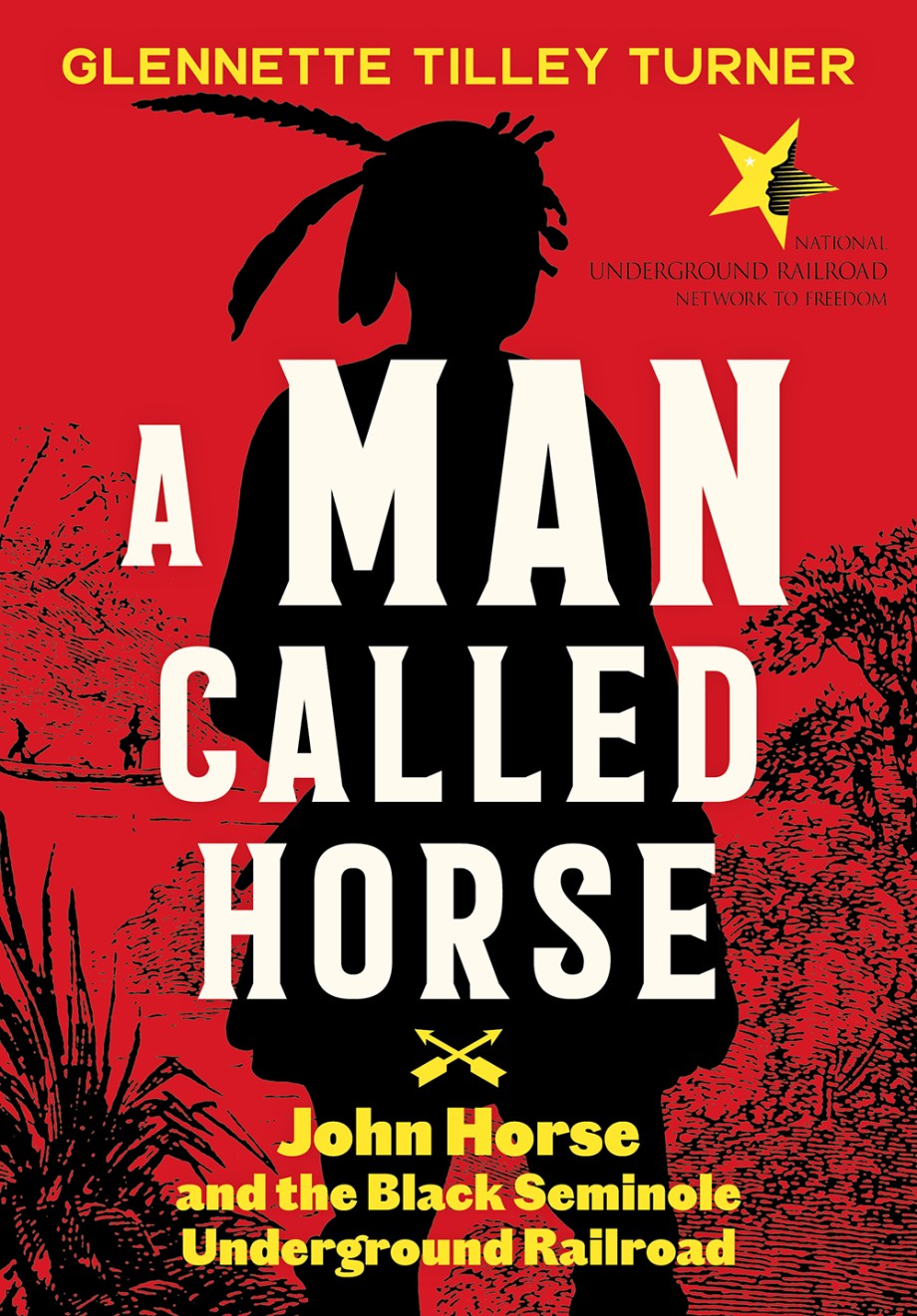
A Man Called Horse: John Horse and the Black Seminole Underground Railroad
Glennette Tilley Turner
A readable biography for young readers and families, developed with help from Horse's descendants.
View the BookJoin the Black History Blitz
Stories like John Horse's, straight to your inbox.
The forgotten rebels, artists, and history makers the textbooks skipped, plus first look at new art and collectibles.
Frequently Asked Questions
+ Who was John Horse (Gopher John)?
John Horse (about 1812-1882) was a Black Seminole leader of African and Seminole descent. He fought in the Second Seminole War, helped found Wewoka, Oklahoma, in 1849, and led Black Seminoles and Seminole allies to freedom in Mexico in 1849-1850.
+ Why was John Horse called Gopher John?
As a boy near Fort Brooke in Tampa, he repeatedly sold the same gopher tortoises to Colonel George Brooke. When Brooke discovered the trick, he made the boy deliver every tortoise he had paid for and nicknamed him Gopher John.
+ Who were the Black Seminoles?
Black Seminoles were Africans who escaped slavery or were free and settled among the Seminoles in Spanish Florida. They lived in their own towns, allied with Seminole leaders, intermarried, and fought alongside Seminoles against U.S. forces.
+ Was the Second Seminole War a slave rebellion?
Many historians argue it was, in part. When the war began in late 1835, hundreds of enslaved people left Florida sugar plantations and joined Black and Seminole fighters. Researcher J.B. Bird calls it the largest slave rebellion in U.S. history. U.S. General Thomas Jesup himself wrote in 1836 that it was "a negro, not an Indian war."
+ What happened to the Black Seminoles after the war?
They were moved to Indian Territory (Oklahoma), where slave raiders targeted them and an 1848 federal ruling undercut the freedom Jesup had promised. In 1849-1850, John Horse and Wild Cat led many of them to Mexico. Some later returned to Texas and served as the Seminole Negro Indian Scouts, and descendants live today in Brackettville, Texas, Oklahoma, and Nacimiento, Mexico.
+ How is Wewoka, Oklahoma connected to John Horse?
John Horse and his Black Seminole followers founded the settlement in 1849 at the falls of a small creek. Its name means "barking water" in the Mvskoke language, and Wewoka is now the capital of the Seminole Nation of Oklahoma.
Sources and Further Reading
- Kenneth W. Porter, The Black Seminoles: History of a Freedom-Seeking People, rev. and ed. by Alcione M. Amos and Thomas P. Senter (University Press of Florida, 1996)
- Kenneth W. Porter, "John Caesar: Seminole Negro Partisan," The Journal of Negro History 31, no. 2 (1946)
- Joshua R. Giddings, The Exiles of Florida (1858)
- Thomas S. Jesup to Gov. William Schley, December 9, 1836, Digital Library of Georgia
- J.B. Bird, Rebellion: John Horse and the Black Seminoles (johnhorse.com)
- National Park Service, Seminole Incarceration at the Castillo de San Marcos
- Seminole Nation Museum, The Exodus to Mexico
- Oklahoma Historical Society, Encyclopedia of Oklahoma History and Culture: Horse, John
- State Archives of Florida, Engraving of John Horse, circa 1842
- Philip van Zeist, "Surviving, Negotiating, Resisting: John Horse's Leadership of the Black Seminoles" (M.A. thesis, Leiden University, 2025)
